10 High-performing static ads examples for ecommerce

Static ads might seem like yesterday's news, but they're actually one of the most effective formats in modern ecommerce. Why? Because they do one thing incredibly well. Deliver a single, compelling idea in the seconds it takes a customer to scroll past.
By analyzing high-performing static ads in ad libraries, smart marketers are discovering the formulas that actually drive sales. In this article, we'll break down 10 static ad examples that prove simplicity and clarity still reign supreme.
The 5 elements to look for in high-performing Meta/Facebook static ads

To learn from the brands without copying blindly, break down static creatives into parts to test and adapt.
Hook (the 1.7-second job)
Grab attention in about 1.7 seconds. This usually means a dominant visual choice, like strong composition, contrast, text treatment. Or a provocative line that interrupts scrolling. Safe product intros disappear quickly.
Value proposition (the before → after bridge)
The hook earns attention; the value prop earns understanding. The framework: current state (pain), your solution (bridge), future state (outcome). People buy life improvements, not specs.
Creative format (even “static” is a format decision)
Static works best when the message is simple and the action is immediate. Complex explanations in one image fail, creating tiny text and confusion. Static should feel like one idea, one glance.
Call-to-action (specific beats polite)
Generic CTAs cause hesitation. Direct, specific commands with clear next steps and urgency perform better than learn more. A static ad is often your most direct click here moment, don’t waste it on vague language.
Trust (because skepticism is higher now)
With more transparency and disclosure, trust matters more. Static ads build trust through proof inside the creative itself. Clear claims, ingredient or feature callouts, recognizable brand cues, or anything that reduces the is this legit? pause before clicking.
A practical shortcut for research is to use ad longevity as your first filter. Ads running 30+ days are meaningful; 90+ days are proven winners. Use this to prioritize what you analyze.
Then apply click-through rate (CTR) logic. If the hook fails, nothing else matters. If CTR is strong but sales are weak, the problem is likely the offer or landing page, not the image.
This is the 2026 mindset. Study proven ads instead of guessing to launch with confidence and real data. Tools like Trendtrack make this process easier by letting you find, filter, and monitor these patterns in one place.
10 static ads examples that are clearly working in-market
Below are 10 high-performing static ads examples from Trendtrack ad intelligence views. You will find the key creative decisions that make them convert.
1. The Body Shop Ginger Shampoo
The ad features one clear promise. 12 weeks to thicker, fuller looking hair. It immediately supports that with three ingredient callouts. Madagascan ginger root extract, Mexican organic aloe vera, and Birch bark.
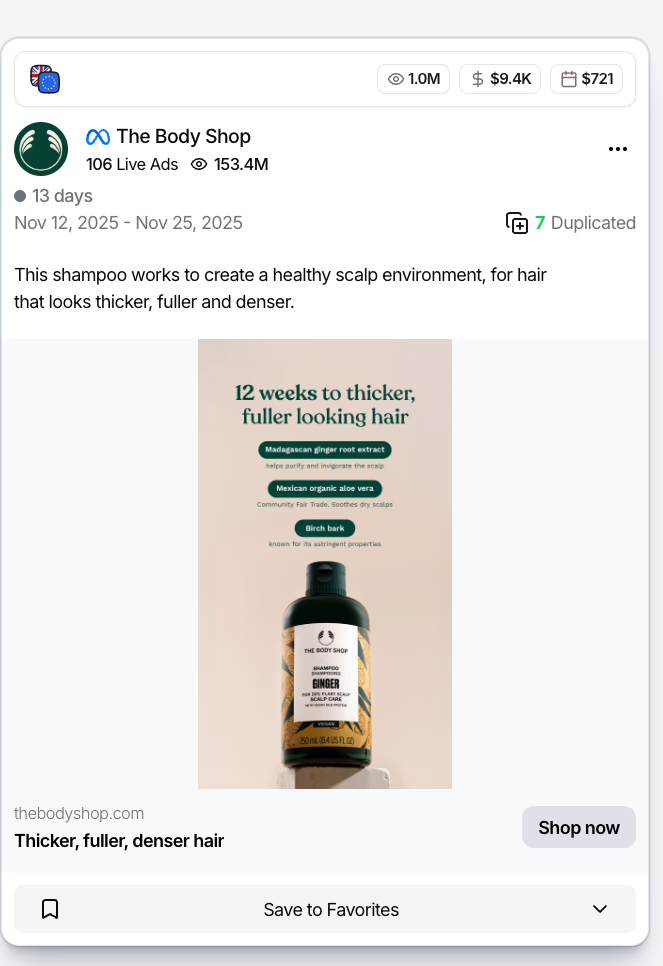
The caption stays focused: “create a healthy scalp environment” resulting in hair that looks “thicker, fuller and denser.”
Performance signals include 1.0M views and 7 duplicates. This duplication shows teams iterate on ads that perform well.
This ad works because it blends a time-bound outcome with proof cues (ingredients) without clutter. The minimalist, warm background directs attention to the brand’s claim, product, and proof.
2. Helly Hansen Skagen F-1 Offshore shoe
When selling a product people already know, the key is removing everything that slows understanding.
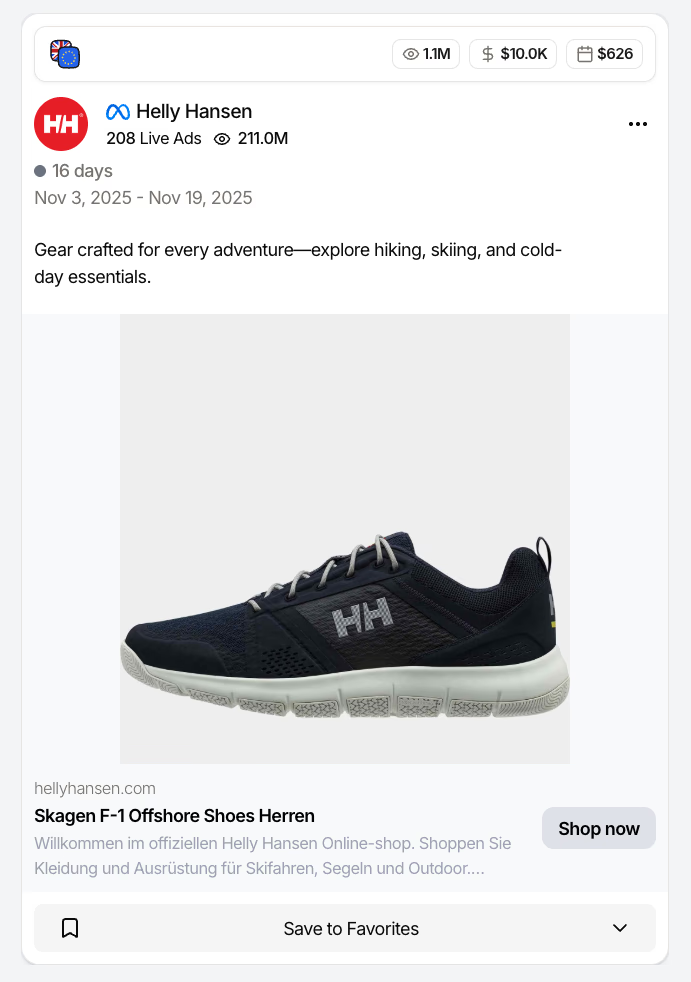
This ad uses negative space and one crisp side product shot. The copy is broad but precise. “Gear crafted for every adventure, explore hiking, skiing, and cold-day essentials.” It ends with a frictionless CTA. Shop now.
Performance signals include 1.1M views, $10,000 spend, and localized text for UK/EU audiences.
It works because it's brutally direct. This ad doesn’t educate or entertain. It converts buyers who have intent and need only a clear path to purchase.
3. Bose QuietComfort Ultra “Desert Gold”
Bose creates premium world-building instead of minimal utility. The headphones rest on a gold-flecked rock in a warm, desert-toned setting matching the product color.
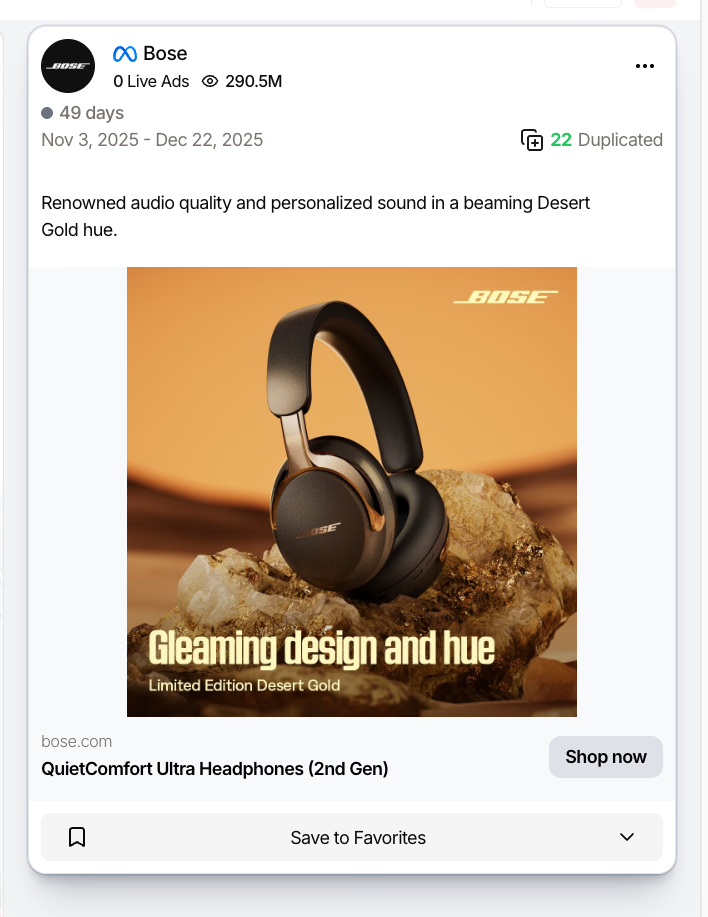
The copy uses sensory language. “Renowned audio quality and personalized sound in a beaming Desert Gold hue,” and exclusivity. Limited Edition Desert Gold.
Performance signals include 290.5M impressions and a long-running campaign from Nov 3, 2025 to Dec 22, 2025.
This ad works because the image persuades without explaining. The product looks like an object you want to own. Premium brands use static ads to make price feel emotionally logical.
4. Nike Challenger shorts
Nike uses a simple setup. A model wearing the shorts, neutral background, a small swoosh, and a straightforward line. “Get the gear that's up for it all. Any time. Anywhere.”
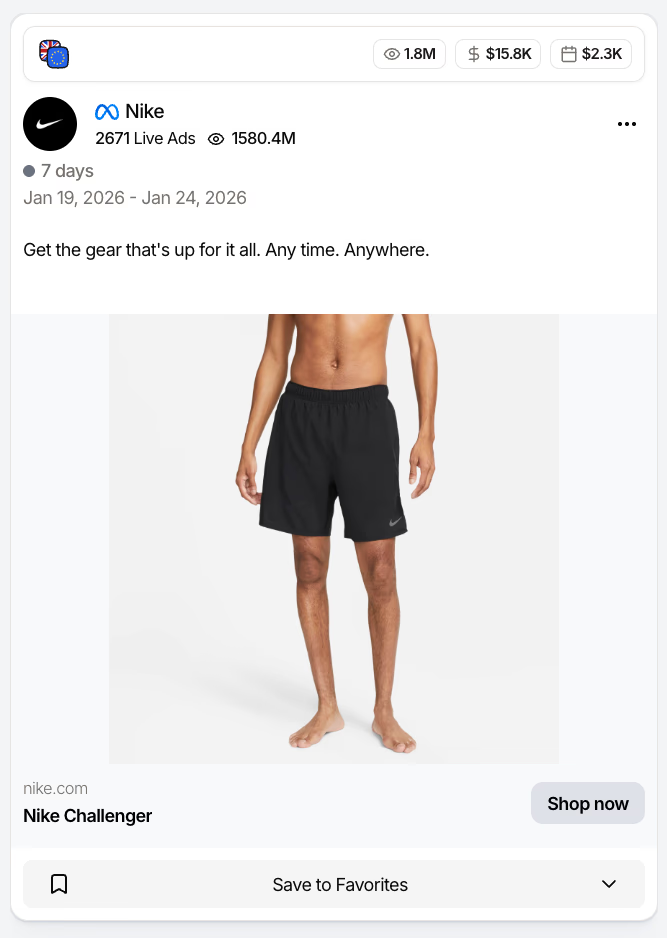
Performance signals: 1.8M views and $15.8K spend.
It works because it's fit-first. No distractions or props compete with the product. Since buyers mainly ask, “Will this look good on me?” the ad clearly frames the product and captures the Nike feel.
5. AKT London deodorant
AKT presents a flat lay of the deodorant balm and metal key accessory on a dusty rose background. The most memorable part is the typography: “30% OFF”, paired with social proof: “11,000+ 5 reviews”* and “No.1 in Vogue.”
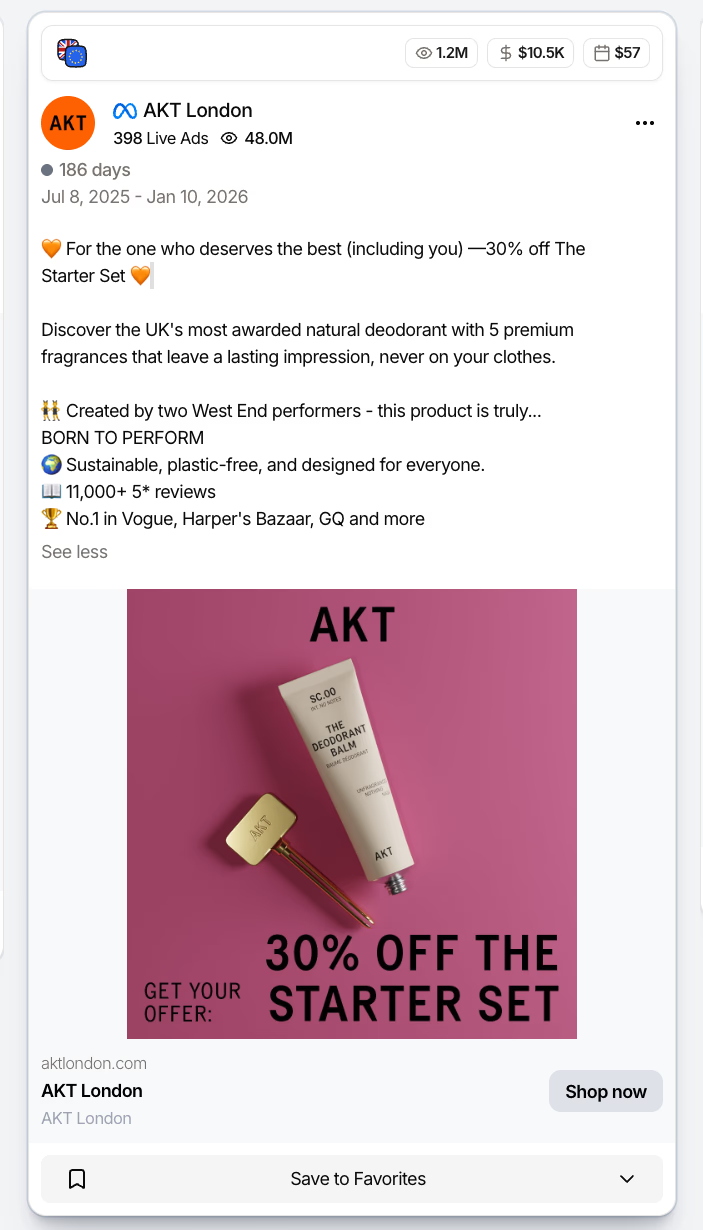
Performance signals include 48.0M impressions and 1.2M views.
This ad works because it builds trust fast. A discount lowers risk, review volume offers social proof, and Vogue endorsement lends authority. Personal care buyers want reassurance before switching, and this ad provides it instantly.
6. SURI electric toothbrush
SURI uses five toothbrushes in different colors stacked vertically, clean and visually pleasing. The copy combines:
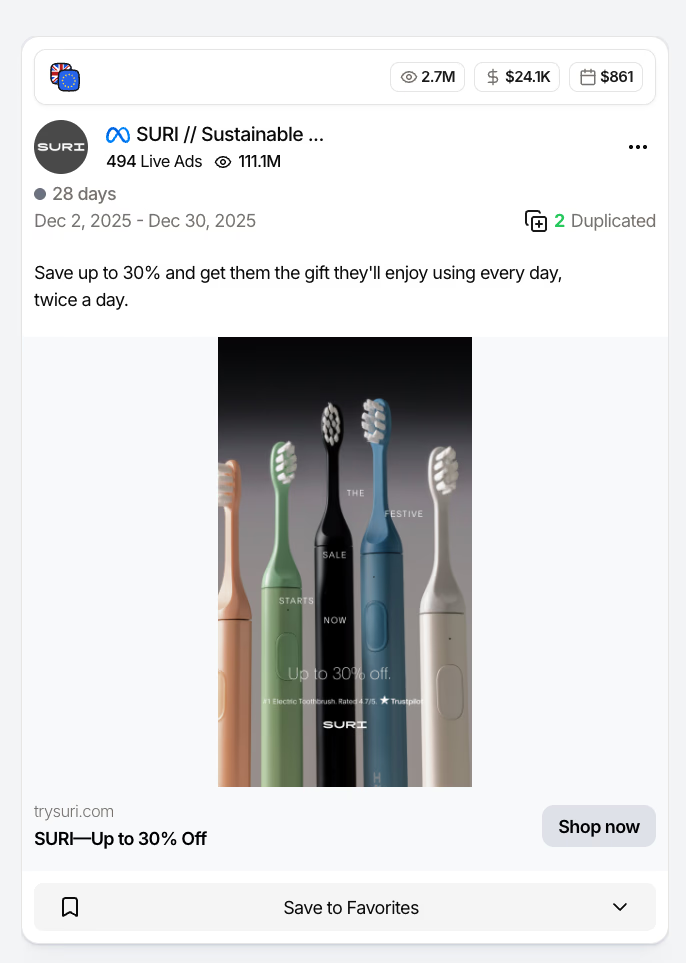
Offer: “Save up to 30%”
Use case: “Get them the gift they'll enjoy using every day, twice a day.”
Trust: “#1 Electric Toothbrush Rated 4.7/5 Trustpilot”
Performance signals include 2.7M views and $24.1K spend.
The ad works because it reframes the purchase as gifting, easing decision-making. Using Trustpilot ratings reduces hesitation, while the clean design keeps focus tight.
7. X5 tanning spray
This lifestyle ad shows a woman smiling beside a pool at night, holding the spray. The copy uses a strong repeating rhythm:
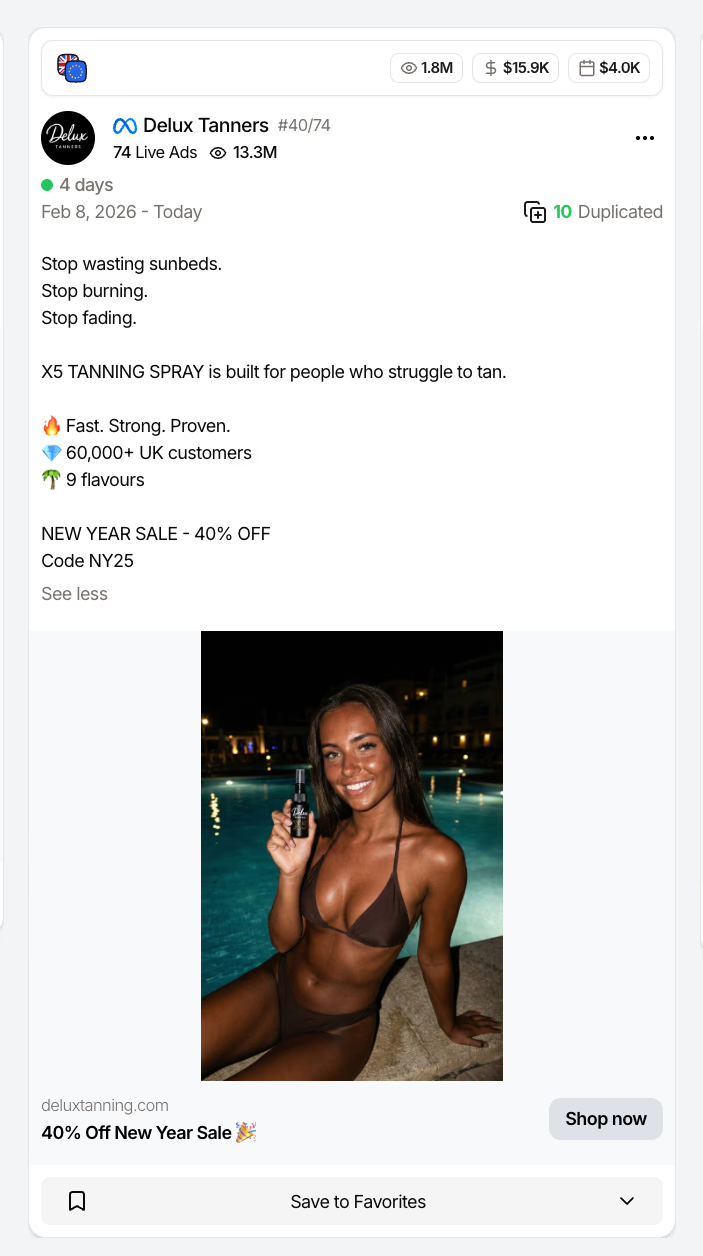
“Stop wasting sunbeds. Stop burning. Stop fading.”
It specifies the audience“built for people who struggle to tan.” It includes a promo code and social proof. Performance signals include 1.8M views and 10 duplicates.
This ad works by pairing an outcome image (the tan) with copy that hits common frustrations without overexplaining. The direct-response style and relatable photo effectively drive conversions.
8. Fabulous Pharmacist “Love your vulva”
This ad builds credibility through the author’s photo, the book cover, and several five-star review snippets. Headlines read: “The Book Every Woman Needs To Read!” and “Finally: The Straight-Talking Book on Female Wellness.” The CTA is Order now.
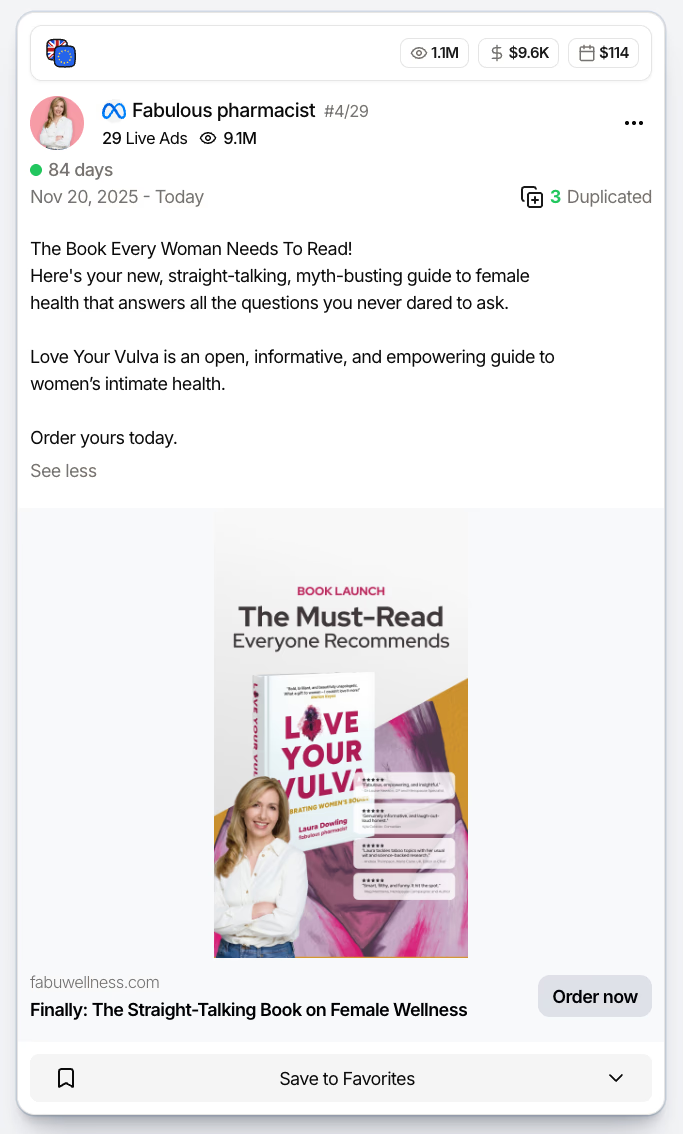
Performance signals include a long runtime of 84 days, $9.6K spend, and 1.1M impressions.
It works by stacking trust in one frame, authority figure, social proof, and clear positioning. Ads rarely last 84 days if they don’t perform consistently.
9. Shopify static ad example
Shopify focuses on people first, showing two entrepreneurs smiling over a laptop in a workshop. This identity cue communicates that the product is for you before mentioning anything about it.
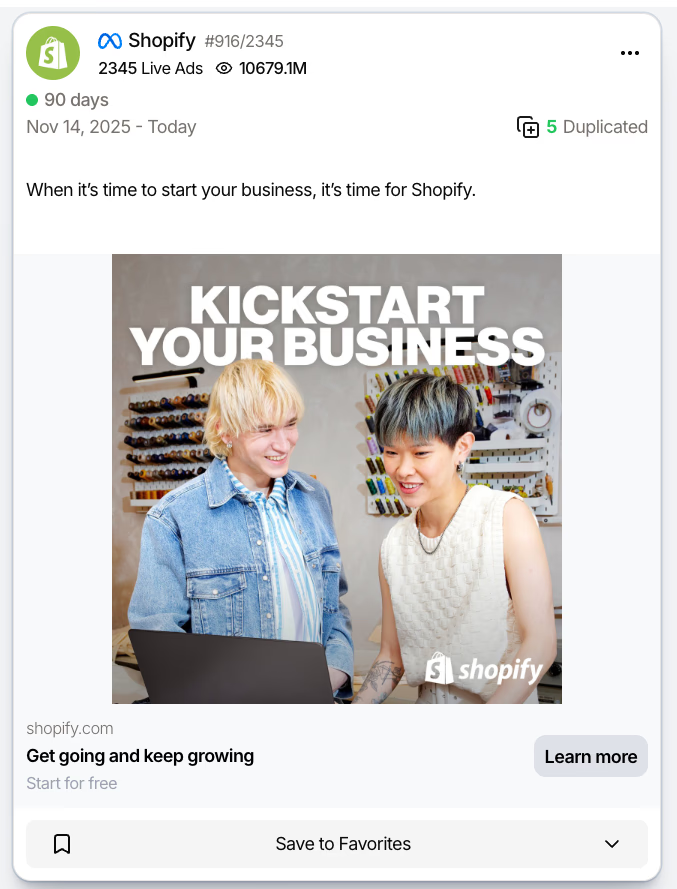
The copy encourages conversion: “When it's time to start your business, it's time for Shopify,” with the call. KICKSTART YOUR BUSINESS, and a frictionless step. Start for free.
The ad belongs to a large ongoing campaign (2345 Live Ads), with this creative duplicated 5 times.
It works because it doesn’t prove Shopify’s quality. Instead, it offers a simple next step for cold audiences who don’t want to think much. In static ads, clarity beats cleverness.
10. COS sale
COS blends fashion editorial style with direct-response offers. The ad features a moody, minimal photo of a model in a dark blazer with shallow depth of field.
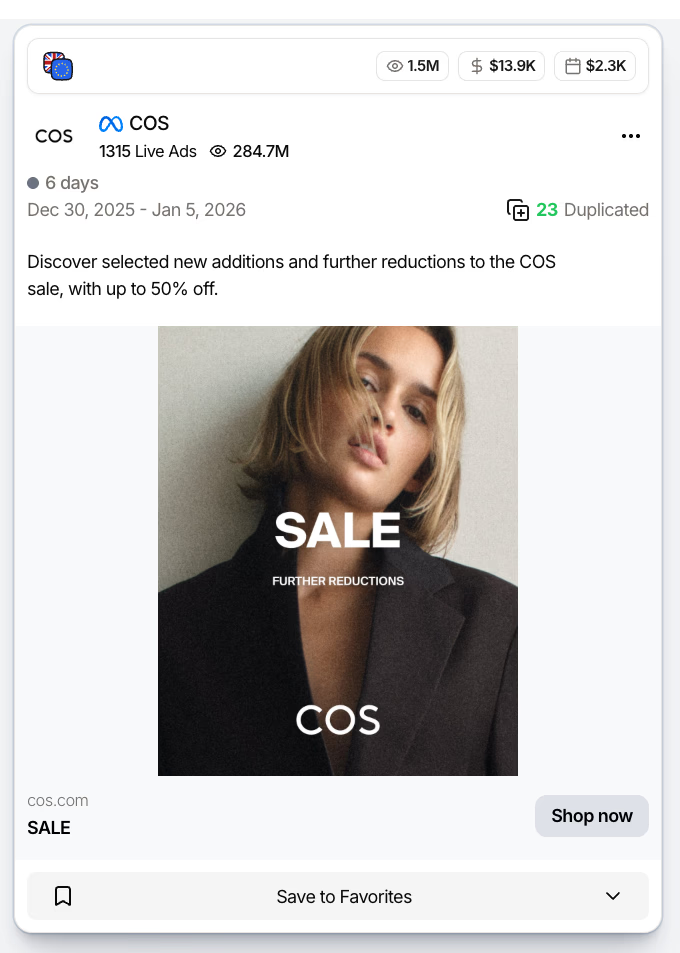
On top, COS overlays bold typography. “SALE / FURTHER REDUCTIONS / COS.” Body copy reads: “Discover selected new additions and further reductions to the COS sale, with up to 50% off.”
Performance signals include 1.5M impressions, $13.9K spend, a daily budget of $2.3K, and 23 duplicates over 6 days.
This ad works by maintaining the brand’s visual style while making the sale offer impossible to miss. The “further reductions” hook motivates shoppers who missed the initial sale wave to return.
Discover What Sells Online
Uncover winning products and strategies before your competitors do. Trendtrack gives you access to 10,000+ trending Shopify stores and high-performing ads in one intuitive platform.

Static ads vs dynamic ads
A static ad on Meta/Facebook is a single image creative. It has one frame and one message designed to:
Stop the scroll
Communicate value
Push a click
Meta also offers “dynamic” approaches, often called DCO (Dynamic Creative Optimization). The difference is clear. Static is fixed, while dynamic variations rotate or recombine elements. This lets the platform test many combinations.
Tools like Trendtrack let you break down a brand's creative mix by type: Image, Video, DCO, and others. This makes it easy to see what they focus on. So, why do established dtc ecommerce trends keep scaling with images when video is everywhere?
Because message clarity matters more than format. Meta rewards ads that quickly communicate something people care about. Static images often deliver this best, especially with simple stories such as:
A single hero product
A flash sale
A gift angle
A “one problem → one solution” promise
Video can outperform images but only if the first three seconds capture attention. Videos can generate 270% more leads than static images, only if viewers engage immediately. If not, you pay for impressions without understanding.
Static ads don’t have a “first three seconds” problem. They must create a scroll-stopping moment instantly.
When analyzing competitors, a static ad still live after 30, 60, or 90 days is a strong signal. Every active ad is a market test funded by someone else. If it’s still running, it likely passed a profitability filter.
You can validate an idea without guessing by starting with longevity, then reverse-engineer why the image works.
Another 2026 factor is the late-2025 EU transparency changes. Increased disclosure labels and sponsor visibility raise baseline skepticism. This actually helps good static ads.
Creatives that build trust quickly need three things. Clear claims, tight proof, and no confusion. Audiences grow more suspicious of vague marketing. So these elements matter even more today.
How to turn static ads examples into profitable tests with Trendtrack
Static ads are easy to copy and harder to interpret correctly. One brand's winning image might be a temporary promo, a retargeting ad, or a brute-force spend play you can't afford to replicate.
Trendtrack turns competitor creative into a weekly testing system with fewer blind bets. You validate an idea without guessing.
Static ads vs dynamic ads: when to use each for Shopify and DTC funnels
Most teams debate “static vs video” as a creative preference. Actually, it depends on message complexity.
Use static ads if your offer is simple: discount, bestseller, or giftable product.
Use videos for education or demonstration, but only if the first three seconds grab attention; otherwise, you pay to be ignored.
As we mentioned above users decide in roughly 1.7 seconds. One frame can deliver a complete message instantly, which explains why static ads still scale well. Here’s a practical guide for choosing formats in a DTC funnel:
Situation | Static image is usually better | Dynamic/video is usually better |
|---|---|---|
Cold prospecting | Simple promise, clear benefit, easy next step | Demonstration, transformation, or “proof in motion” |
Retargeting | Offer reminders, urgency, social proof overlays | Longer objection handling and deeper explanation |
Catalog/variety | Pushing one hero SKU or bundle | Show multiple angles or sequence a story quickly |
Creative bandwidth | Need fast volume and quick iteration | Support scripting, editing, and refresh cadence |
Trendtrack doesn’t force the choice. It makes it obvious by showing what competitors run, how long ads survive, and how aggressively they duplicate them.
Want to see real examples of high-performing static ads in action? Browse our DTC ads examples to discover what's actually working across ecommerce brands right now.
How to validate performance with Trendtrack
Many teams take inspiration from what’s out there, not from what’s still alive. Trendtrack focuses on signals that answer. “Is this ad angle profitable or just new?” Ways to validate quickly using core features:
Ads: Filter by images, then narrow by creation date, days running, duplicates, category, and Page-level details. Like followers/likes and Page creation date. Use keyword searches for angle mapping, such as “30% off,” “starter set,” “gift,” or “Trustpilot.”
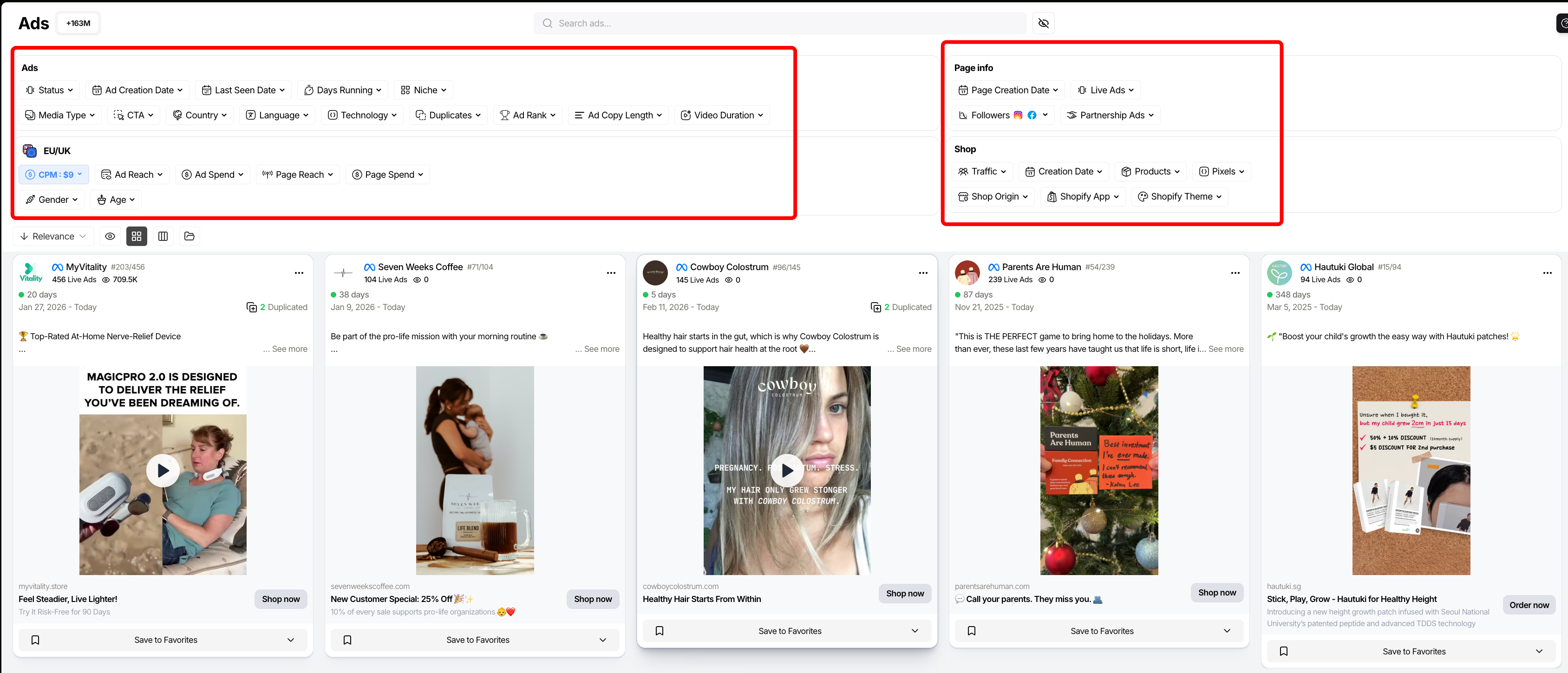
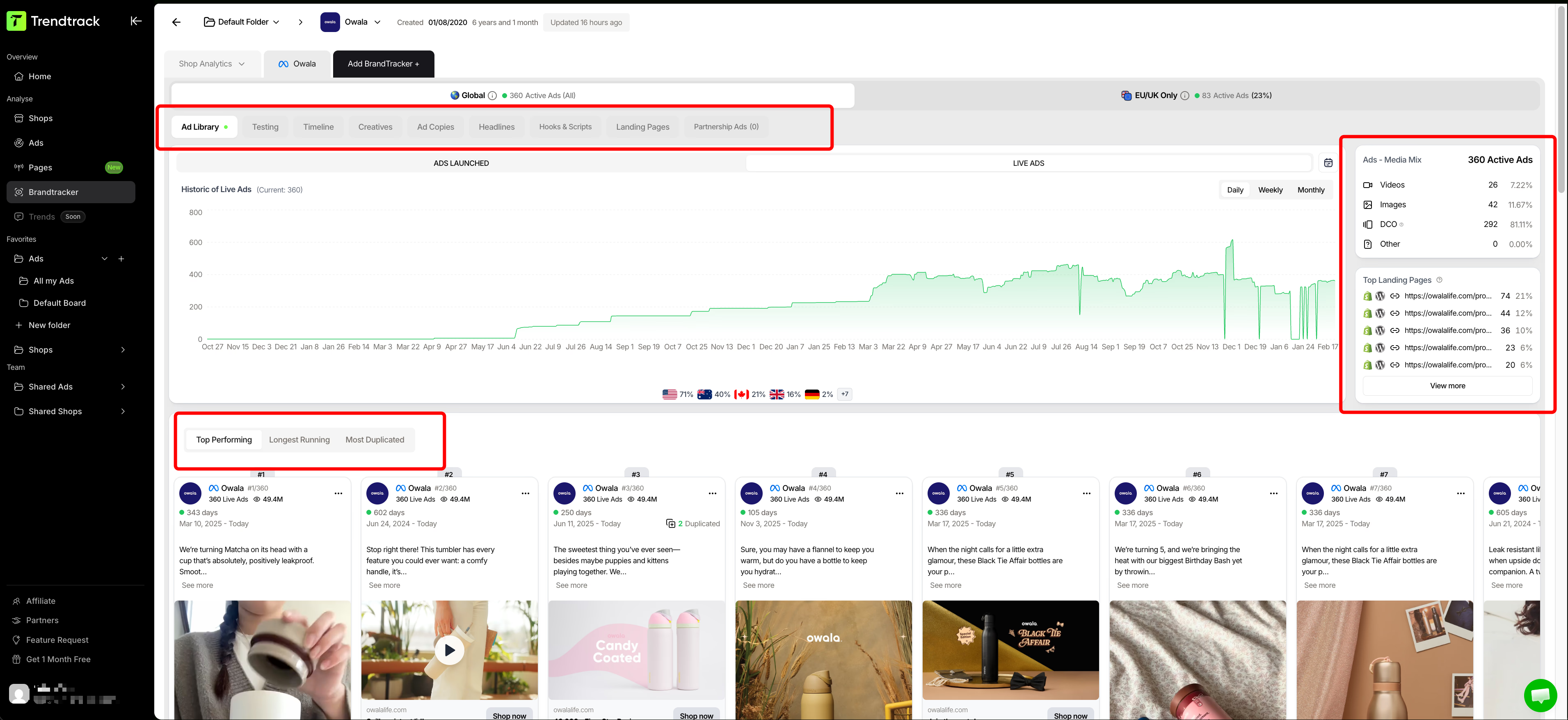
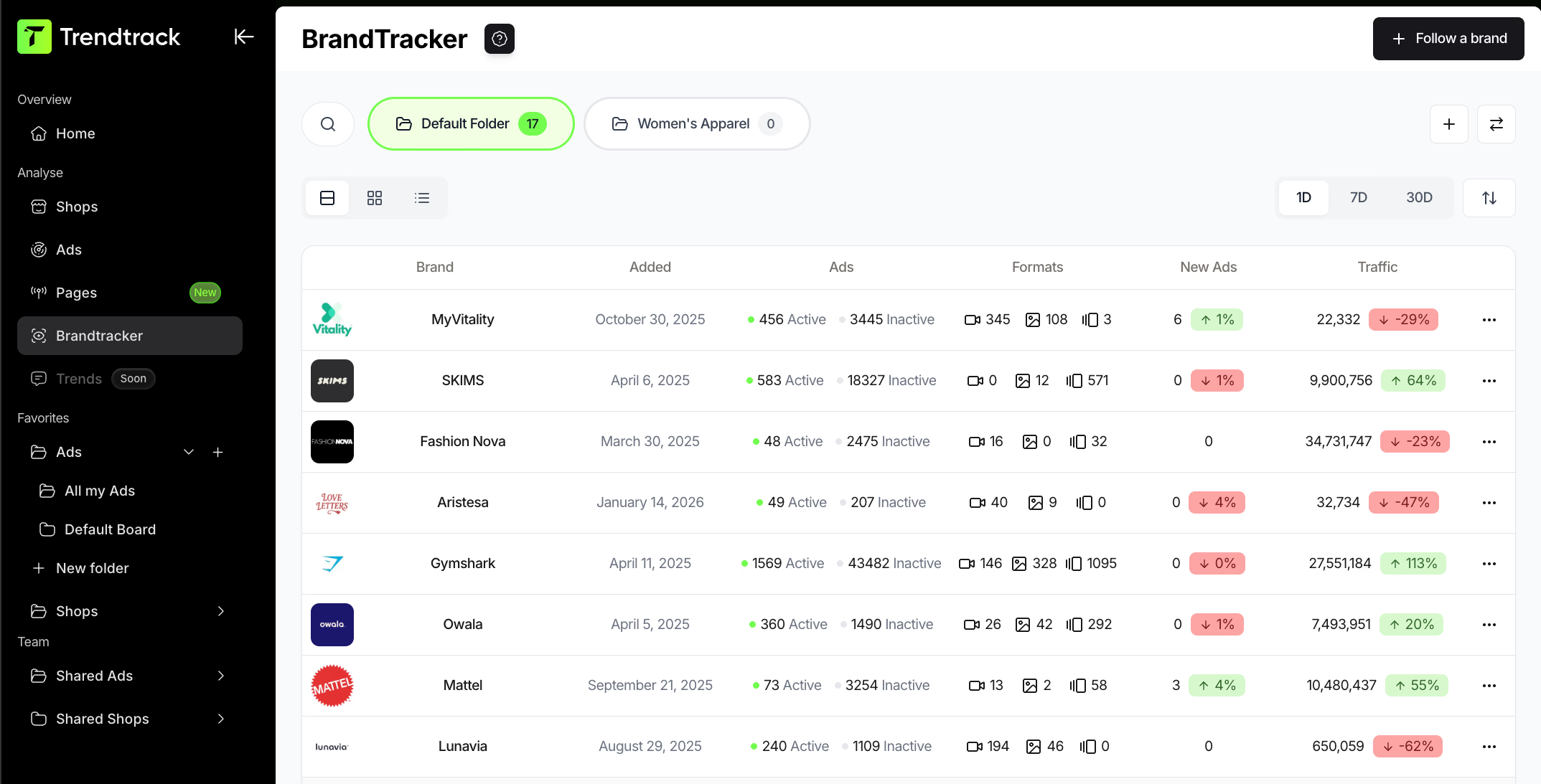
Brandtracker: Make ads a repeatable research asset by seeing:
The brand’s media mix (Image, Video, DCO, others)
View of testing vs active ads with winner badges
Creatives sorted by longest running or most duplicated
Their most used ad copies and headlines
Their landing pages, with live preview and direct ad links
Landing page alignment often explains a winning creative. If the ad promise and above-the-fold offer don’t match, ROAS suffers even when the image is strong.
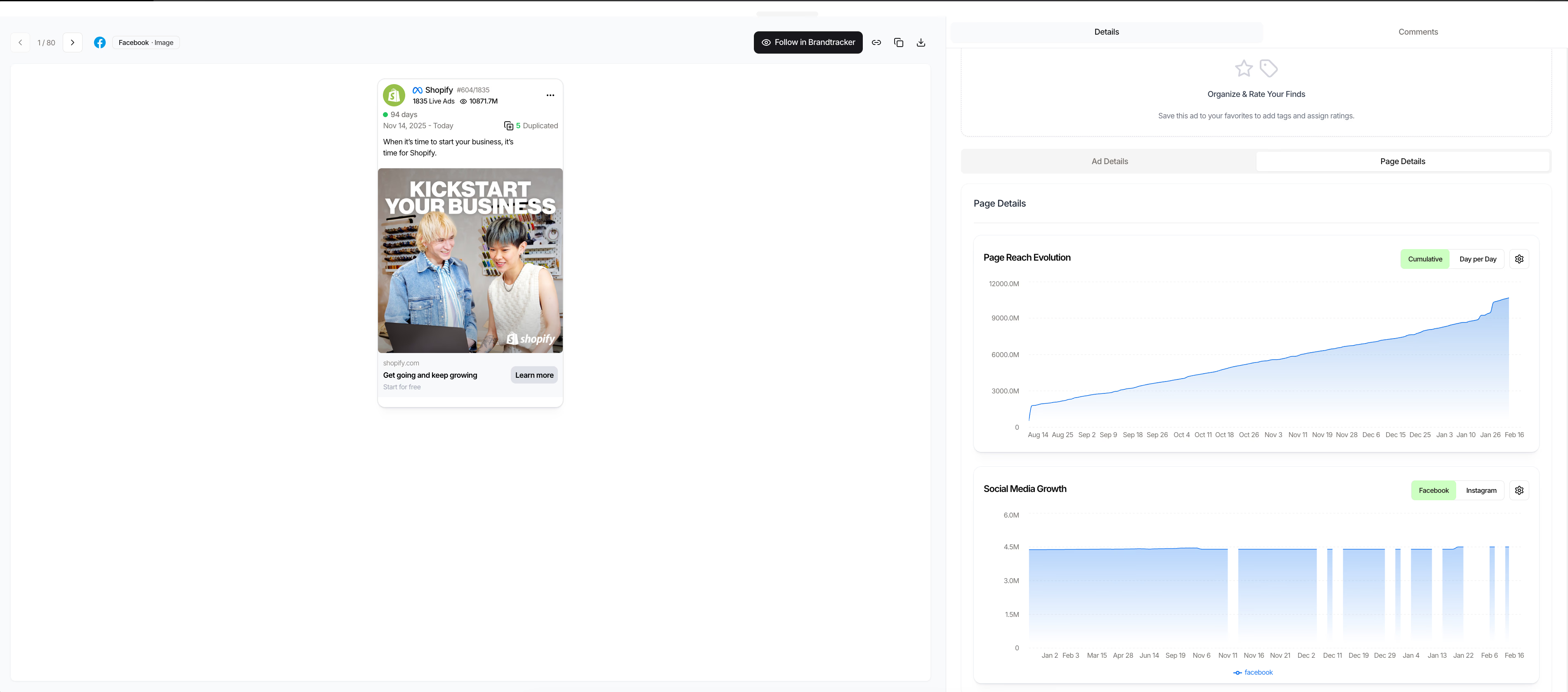
For example, this Shopify static ad runs from Nov 14, 2025 – Today, among 2,345 live ads, with 5 duplicates. Patterns like this indicate ads that survive and are reused, not one-offs. To save time browsing, rely on “days running” and “duplication” as initial filters.
Want to systematize your competitive research? Learn how to track competitor ads at scale and turn insights into a repeatable creative workflow.
How to set success targets with ROAS, BEROAS, and attribution reality
A static ad test is only “good” relative to your economics. Copying another brand’s ROAS target can mislead. Two key points:
The old “4:1 ROAS” rule is outdated. The average ROAS across industries is around 2.19:1.
Post-iOS tracking loss is real. Mobile-heavy brands often see 20–30% attribution loss, causing under-reporting in Ads Manager.
Start with break-even ROAS:
BEROAS = 1 ÷ Profit Margin
Trendtrack includes a Break-Even ROAS calculator. Enter your selling price, cost of goods sold, shipping, and taxes to get a precise baseline. A “2.4 ROAS” can mean a win or loss depending on whether your break-even ROAS is 2.1 or 2.35.
Also, don’t let attribution gaps trick you into killing a working static ad. I
2026 Meta basics that can break static performance
Static ads are simple but still suffer from platform realities:
Placements and ratios: Meta auto-adjusts placements, but custom ratios perform better:
4:5 for Feed
16:9 for In-Stream
9:16 for Stories
Using one layout for all placements reduces performance.
Sound-off behavior: Overall account performance depends on how users consume content. Around 41% of videos lose meaning without sound, and captions increase view time by about 12%. For static ads, assume low attention and patience.
EU transparency and skepticism: New EU rules require disclosure labels, sponsor naming, and consent flows, increasing skepticism. Static ads must build trust with a clear offer, clear brand, and proof elements to reduce “this feels shady” friction.
Turning competitor ads into a repeatable creative playbook with Trendtrack
Instead of cloning ads, steal the structure of what survives. This workflow fits a busy team:
Start from live market tests, not ideas
Use Trendtrack’s Ads filtered for Images, with filters like Status: Active and Days running: Min 30 to find proven ads.
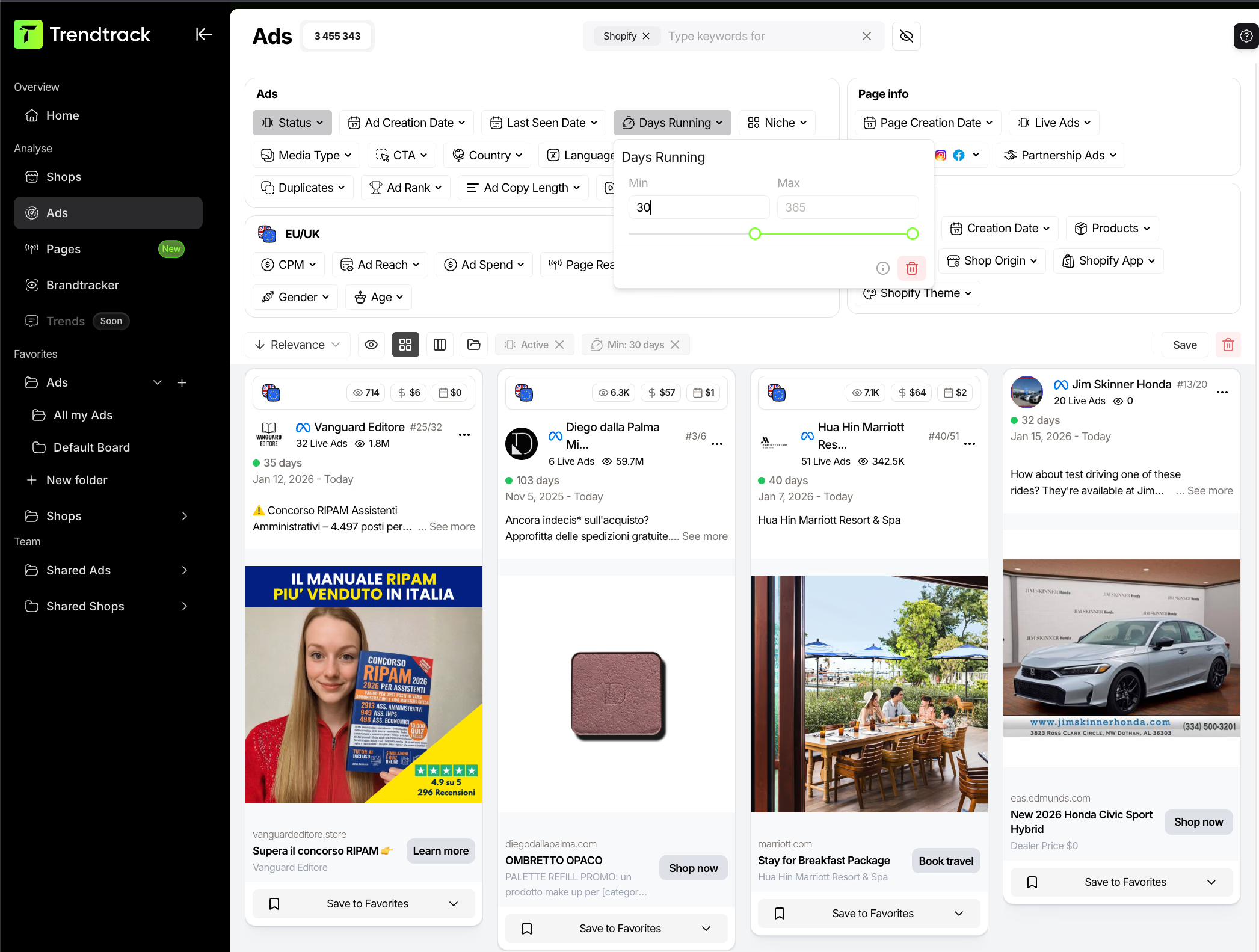
Decide what you’re borrowing: offer, proof, or framing
Static winners focus on one:
Offer-first: discount, bundle, seasonal
Proof-first: reviews, ratings, authority
Aesthetic-first: premium composition, brand world
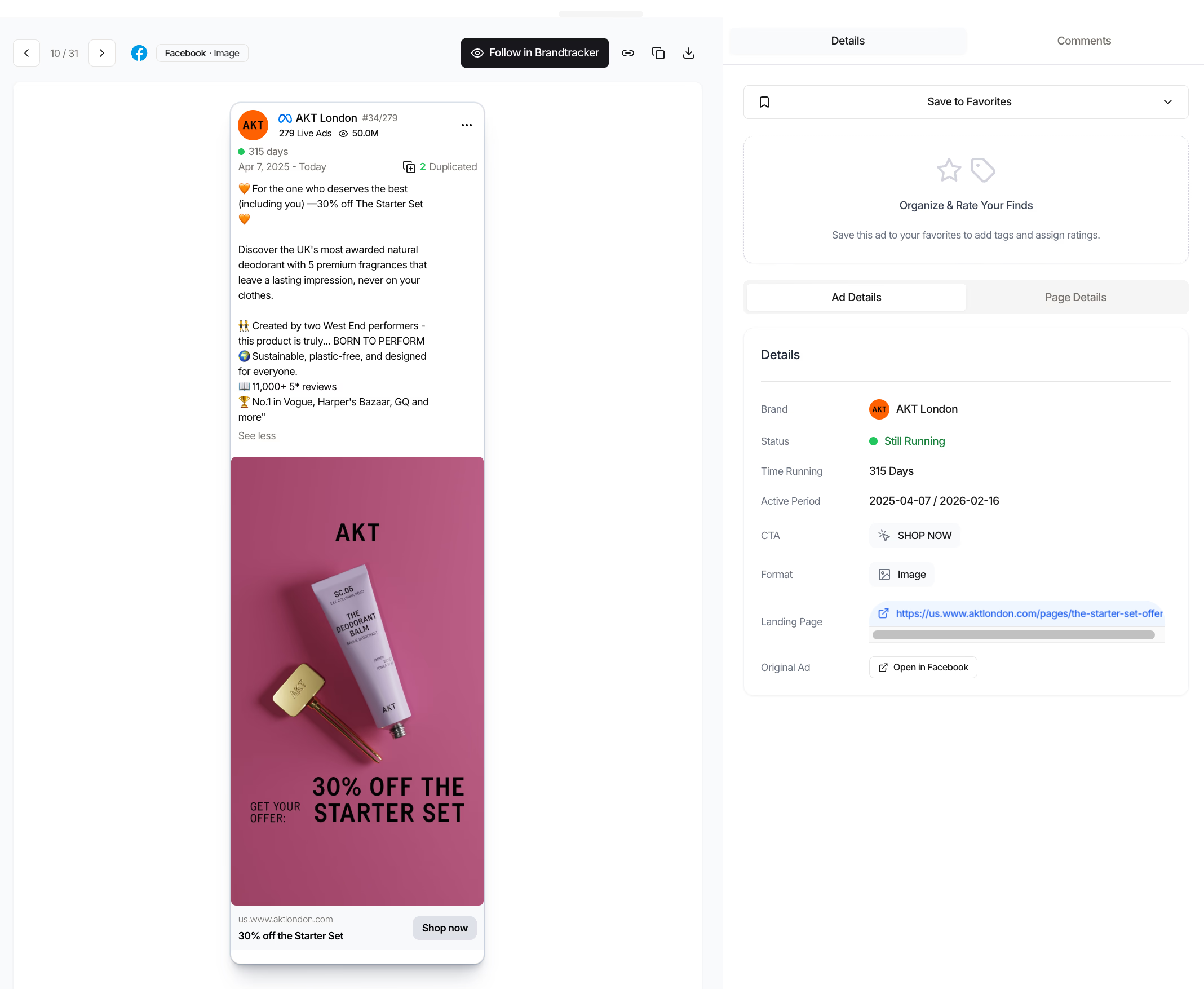
For example, AKT deodorant uses an offer combined with trust cues. “30% off The Starter Set”, 11,000+ 5-star reviews, and “No.1 in Vogue”. This structure removes doubt quickly.
Validate the angle with duplication and spend/reach signals
Filter EU/UK ads by real spend and reach. Look for ads spending meaningful budgets, such as €1,000 in the last 7 days, with duplication. Duplication often signals scaling efforts.
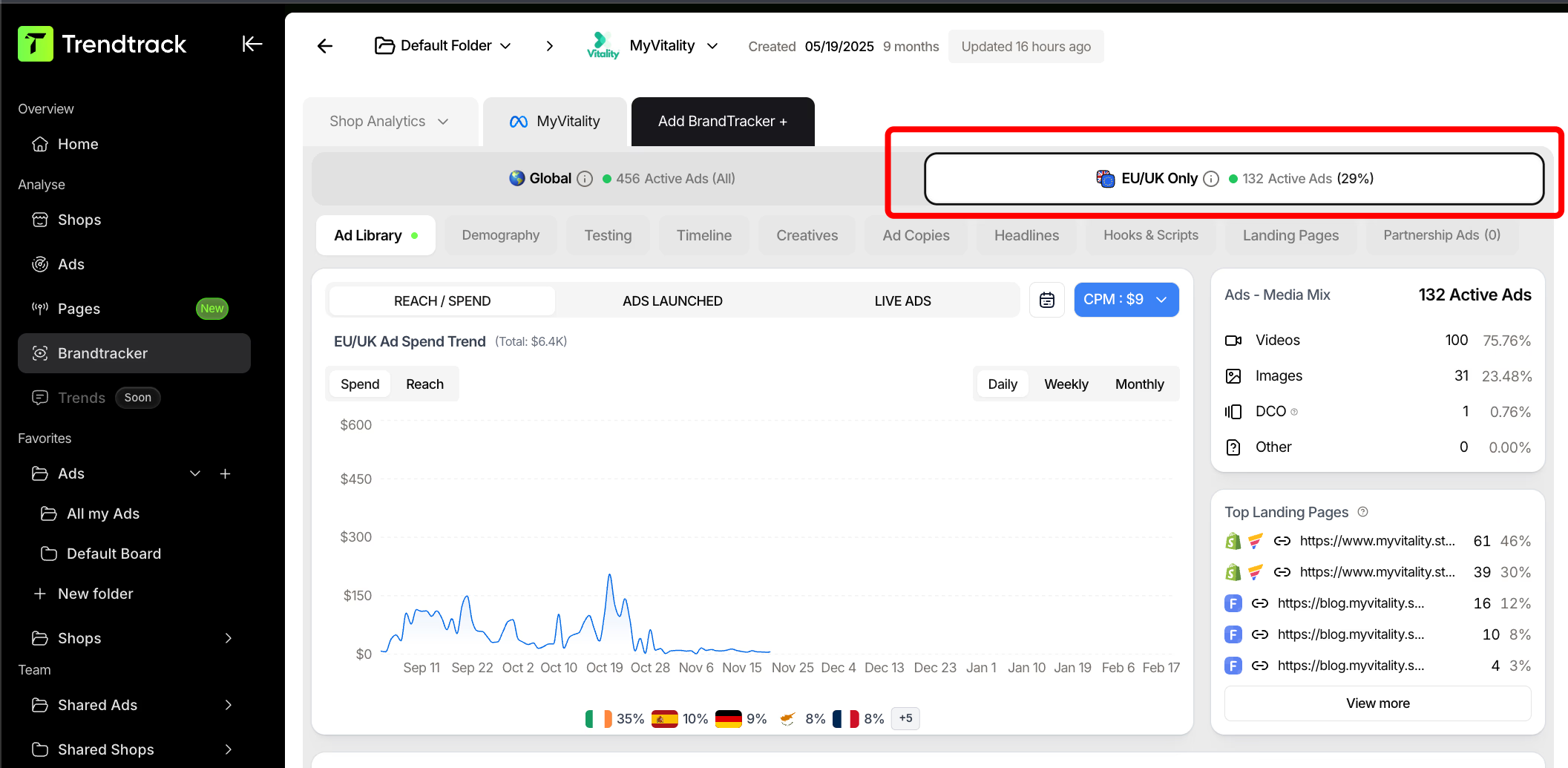
COS sale ad illustrates this. 1.5M impressions, $13.9K spend, an estimated daily budget of $2.3K, and 23 duplicated ads in a Page with 1,315 live ads. Duplication is rarely accidental. It signals scaling.
Tie creative back to store context
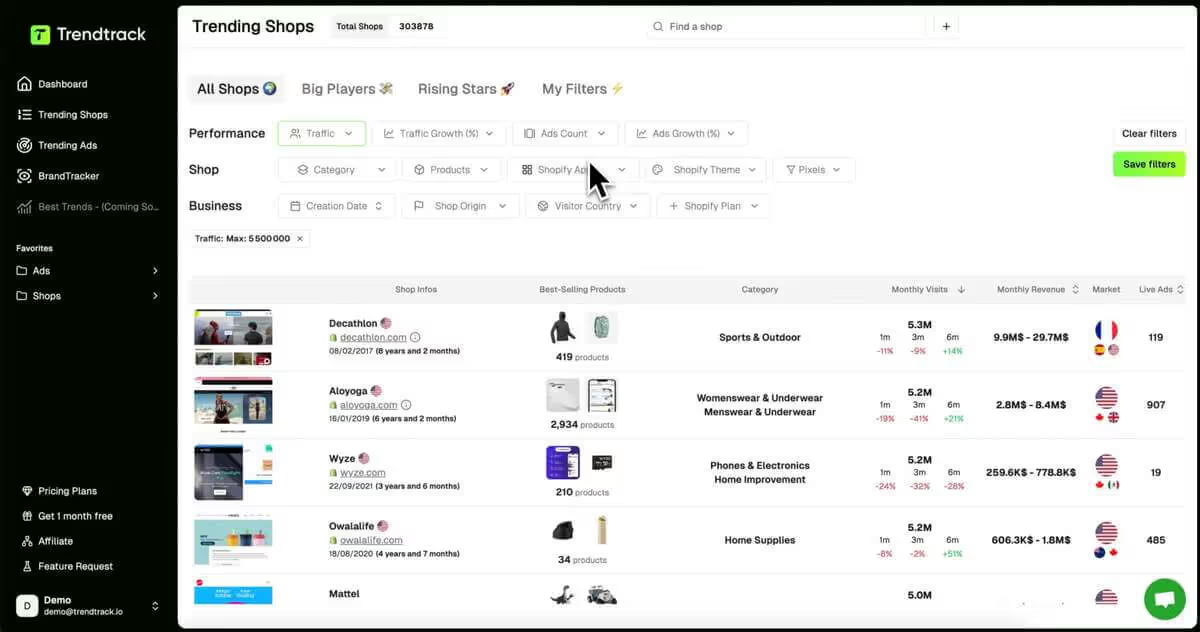
Trendtrack’s Shops tab shows store details like monthly visits, category, revenue, and live ads. Filter for performance signals, like Ads Growth > 20% over 30 days to spot aggressive scalers.
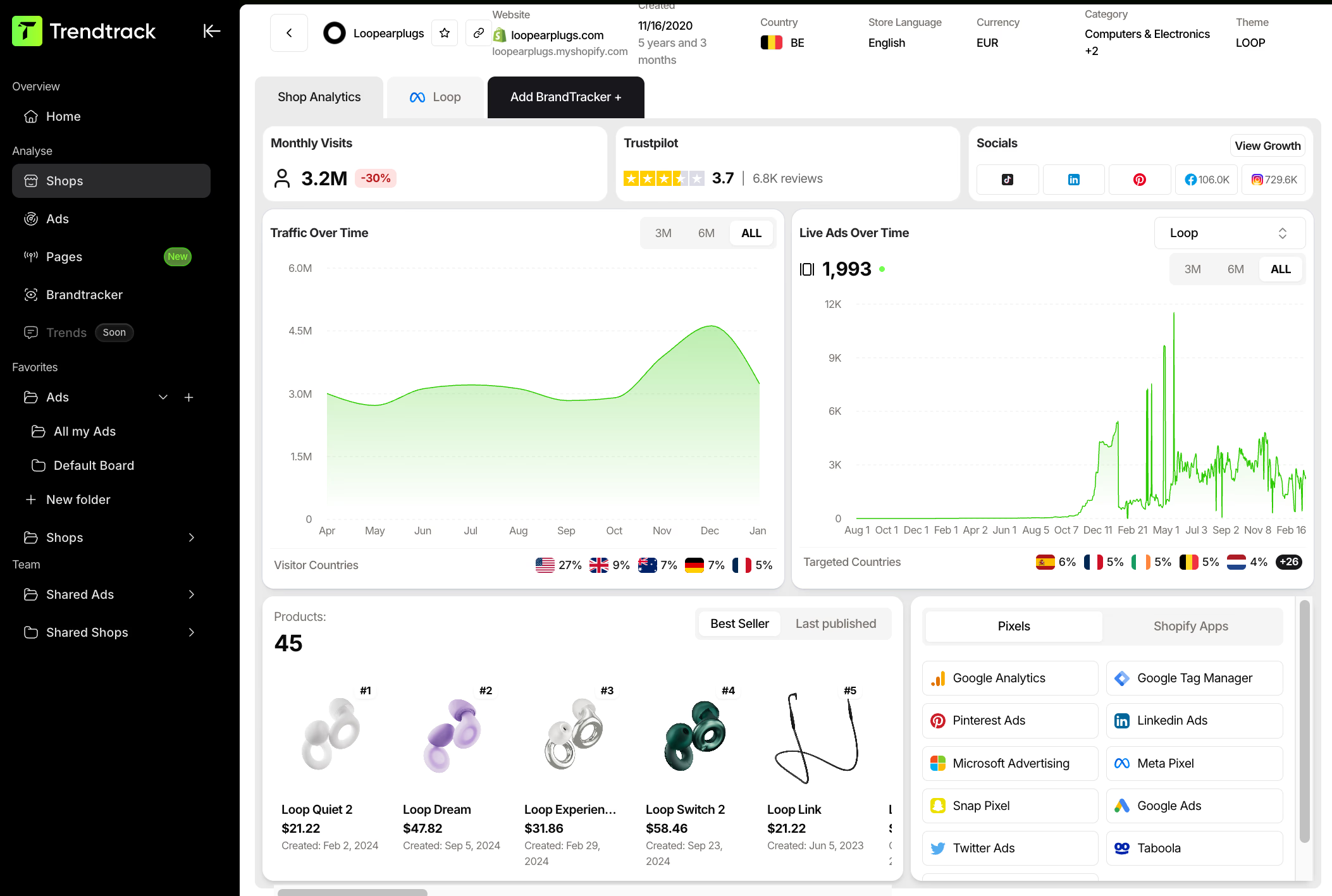
Use Shopify Apps filters to identify AOV/upsell mechanics that Top Scaling shops use. Offer structure can make a mediocre static ad profitable.
Build a testing queue you can ship.
Brandtracker helps by pulling longest-running statics and most repeated headlines/copies. Map these into your own hook, value proposition, and CTA variants.
For faster mid-research checks, use the Trendtrack Chrome extension to see competitor ads, themes, and apps live.
The goal is not “one winning static ad” but a system. Find signals, adapt mechanics, test with your economics (BEROAS), and scale what works. Launch with confidence and real data, staying ahead of competitors.
Analyze High-Performing Ads
Study what makes ads successful. Filter by spend, format, and even pixel setups to find winning ad creative that you can adapt for your business.
Conclusion
Static ads remain one of the most efficient formats in ecommerce advertising. The key takeaway from these 10 examples is simple: clarity wins every time.
Every high-performing static ad delivers one idea instantly. Consider:
The Body Shop's time-bound promise
Nike's fit-first approach
COS's brand-meets-offer balance
Stop guessing what works. Use ad longevity and duplication as your validation filters. Adapt proven structures to your brand. Test against your break-even ROAS.
Tools like Trendtrack turn competitor intelligence into a repeatable creative system. You'll launch faster, place fewer blind bets, and scale what actually converts.


.avif)


Are you ready to get the insights?
From viral trends to million-dollar stores — unlock the insights behind what sells, scales, and converts. All in one place.